

Restaurants live and die in Google Maps. Someone types “tacos near me” or “dinner open now,” taps the first few listings, scrolls the photos, reads three reviews and picks a place within a minute. Owners who have watched that happen night after night tend to understand local search better than most marketers, because the feedback is immediate: a wrong holiday hour or a bad photo shows up as an empty dining room.
Criminal defense firms are ranked by the same system, and a person looking for a lawyer after an arrest makes a decision in much the same way, on a phone, from a short list. This guide looks at what restaurants do well in Google Maps, how each habit applies to a defense practice, and which restaurant tactics a law firm should leave alone.
What this guide covers
- How the map pack works for restaurants and law firms
- Getting the basics right on your Google Business Profile
- Photos and the first impression in the listing
- Review volume, review recency and replies
- Services, menus and charge pages
- Local press, directories and consistent details
One ranking system for burgers and DUI lawyers
Google says local results are ranked mainly on relevance, distance and prominence. A restaurant two blocks away with a strong profile will usually beat one across town for a “near me” search. A well-known place with years of reviews and press coverage can beat a closer one that nobody has heard of.
Defense firms are scored the same way. You cannot change your distance from every searcher, but relevance and prominence are mostly in your hands. Relevance comes from your categories, your services and your website content. Prominence comes from reviews, links and mentions across the web. Restaurants work on both every week. Most law firms check their listing a few times a year, if that.
Get the basics exactly right
Good restaurants are fussy about details that look minor. The name on the profile matches the sign. The phone number rings at the host stand. Hours are updated before every holiday, because Google Maps lets people filter for places that are open now, and a restaurant showing the wrong hours drops out of those results or, worse, sends hungry people to a locked door.
For a defense firm, the same basics matter:
- Use your firm’s real name. Google’s guidelines say the business name should reflect the real-world name, and adding keywords such as “DUI lawyer” to it can get a profile suspended.
- Use a phone number that a person answers, ideally the same one shown on your website.
- Set regular hours to when the office is actually open and add special hours for holidays.
- If someone answers calls at night or on weekends, say so in your description and on your site, since arrests do not keep office hours.
- Choose “Criminal justice attorney” as the primary category if criminal defense is your main work, and add secondary categories only where they fit.
Photos sell the visit
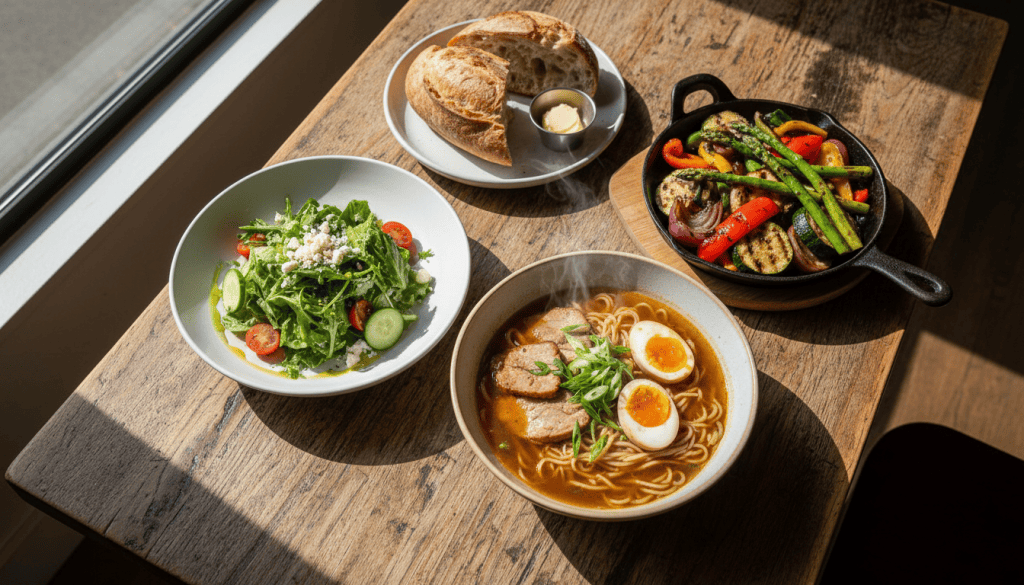
Restaurants know people eat with their eyes first. The best listings show the actual dishes, the dining room at a busy hour and the front of the building so people can find it. Many owners also learn that customers will upload their own photos, and that those often show up first, flattering or not.
A defense firm’s photos do a different job. Nobody needs to see your conference table to be persuaded. They need to recognize the attorney they are about to trust and find the office without getting lost. Add a clear photo of each lawyer, the outside of the building and the entrance, the reception area and the meeting room. Google’s guidance asks that business photos represent reality without heavy filters or AI edits. Keep stock images and staged pictures off your profile.
Reviews: steady and recent beats a big burst
Popular restaurants collect reviews constantly because they serve hundreds of people a week. Searchers can sort reviews by newest, and they notice when the last one was written months ago. Owners who reply to reviews, especially the critical ones, in a calm and specific way often come across better than places with perfect but silent ratings.
A defense firm will never match a restaurant’s volume, and it doesn’t need to. What it can copy is the habit of asking regularly, so reviews keep arriving across the year instead of in one burst after a marketing push.
Some rules apply to everyone. Google’s policies prohibit offering incentives such as payment, discounts or free services in exchange for reviews, and they prohibit discouraging negative reviews or selectively asking only happy customers. Reviews written by employees or anyone with a conflict of interest are not allowed either.
Lawyers have further limits. Your state’s advertising rules govern testimonials, and the ABA’s Formal Opinion 496 says a lawyer generally may not reveal information about a client’s matter when responding to an online review. A restaurant owner can explain exactly what went wrong with an order. A lawyer replying to an unhappy former client should keep it short, avoid any details of the case and offer to talk privately. Check your state bar’s rules before you build a review routine.
Menus, services and charge pages
A restaurant’s menu does a lot of quiet SEO work. When the menu is on the website as real text, and the profile lists dishes and services, the restaurant can show up for searches like “pho” or “gluten-free pizza” even when those words are not in its name. Restaurants that post their menu only as a photo or PDF often miss those searches.
The defense version has two parts. First, the services section of your Google Business Profile, where you can list the types of cases you take, such as DUI defense, domestic violence, drug charges and record sealing. Second, and more important, a separate page on your website for each charge. Each charge page should explain the offense under your state’s law, the possible penalties, what usually happens next in your local court and how your firm approaches these cases. A single page that names every charge in a list is the law firm version of a menu posted as a blurry photo.
Press, directories and matching details
Restaurants get a lot of their prominence from outside mentions: a write-up in the local paper, a spot on a city’s best-of list, a food blogger’s review. Those links and mentions tell Google the place is known in the community.
Defense firms have their own sources of prominence:
- County and state bar association listings
- Legal directories such as Avvo, Justia and FindLaw
- Local news stories where an attorney is quoted on a legal issue
- Talks for community groups, law school events and local sponsorships
Restaurants also learn the hard way that their details must match everywhere. When a place changes its hours or phone number and forgets to update Yelp or a delivery app, customers get confused and search engines get mixed signals. Keep your firm name, address, phone number and hours identical on your website, your Google profile and every directory. That consistency also helps AI assistants such as ChatGPT and Gemini describe your firm correctly when people ask them for a lawyer.
Where restaurant tactics do not fit
Some restaurant marketing has no place in a defense practice.
Restaurants run happy hours, coupons and limited-time specials. Lawyer advertising rules limit how you describe fees, results and comparisons with other lawyers, and some states have specific rules on offers of free consultations or on words like “expert.” Read your state’s rules before you promote anything.
Restaurants want customers to share photos, check in and tag the business. Defense clients usually want the opposite. They may not want anyone to know they hired you, so never pressure a client to post or mention their case publicly.
Restaurants can be judged on taste. A defense firm is judged on trust, often by a scared relative choosing for someone in custody. That raises the value of the plain details: a phone number that works, hours that are right, an office that is easy to find and a website that loads quickly on a phone.
A simple weekly routine
Restaurant owners rarely do big overhauls. They make small fixes all the time. A defense firm can do the same in about half an hour a week:
- Search your main charges plus your city on a phone and note where you appear in the map pack.
- Read any new reviews and reply where it makes sense, without case details.
- Check that hours, phone number and holiday closures are correct.
- Add a new photo or a short profile update if something has changed.
- Write down one question a caller asked this week and consider whether a page on your site answers it.
Questions defense lawyers ask about Google Maps
Why does a firm with fewer reviews outrank us in the map pack?
Distance from the searcher often explains it. Relevance matters as well, so check the other firm’s categories, services and charge pages against yours.
Should we pay for a review service that sends automatic requests?
Automated requests can help, as long as they go to every client who agrees to hear from you rather than only the happy ones, and nothing of value is offered in exchange.
Do customer photos on our profile matter?
Clients rarely post photos of a law office, so most images will be ones you add. Keep them current and accurate.
Can we list every city we serve on our profile?
You can set a service area in some cases, but your profile address must be a real office where you meet clients. For cities without an office, build useful pages on your website instead.
This guide is part of SBD Marketing’s series on criminal defense marketing. SBD Marketing works only with criminal defense law firms, helping them rank in Google, the map pack and AI search.
SBD Marketing · info@sbdmarketing.agency · Book a call: sbdmarketing.agency/scheduling · Serving criminal defense law firms across the USA · sbdmarketing.agency


Leave a Reply